




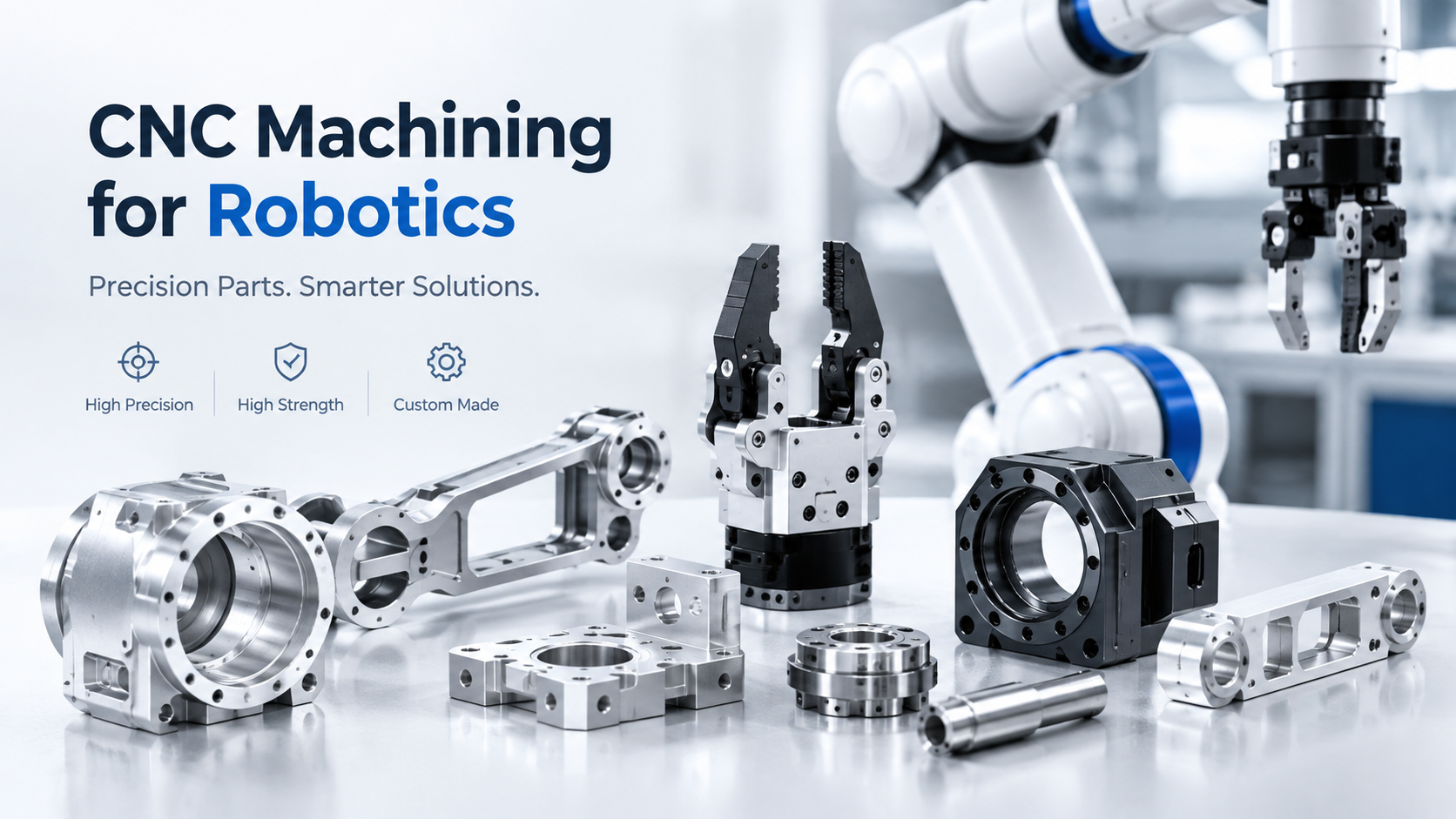
CNC Machining for Robotics: Choosing the Right Process for Robot Parts
As robotics technology continues to develop, robot components are becoming more compact, lightweight, precise, and mechanically complex.
Behind every robotic arm, gripper, actuator, mobile robot, and humanoid robot are numerous mechanical components that must work together accurately. Joint housings, arm links, brackets, shafts, gear housings, sensor mounts, end-effectors, and structural components all have different functional requirements.
For this reason, choosing the right manufacturing process is just as important as the design of the part itself.
CNC machining, 3D printing, sheet metal fabrication, die casting, injection molding, and other manufacturing processes each have their own advantages.
The right choice depends on several factors, including part function, material, geometry, tolerance, surface finish, production volume, and performance requirements.
This article explains how to select a suitable manufacturing process for robotic components and why CNC machining is widely used for precision robot parts.
1.Start With the Function of the Robot Component
Before selecting a manufacturing process, engineers should first understand the actual function of the component.
Important questions include:
- What function does the part perform?
- Does it carry a mechanical load?
- Does it move repeatedly?
- Does it require bearing or shaft fits?
- Does it require high positional accuracy?
- How complex is the geometry?
- How many parts are required?
For example, a robot joint housing may require precise bearing seats, mounting holes, datum surfaces, and multiple machined faces.
A robotic gripper component may require high strength, accurate positioning, and good repeatability.
A sensor bracket may focus more on lightweight construction and dimensional stability.
These differences directly affect the choice of manufacturing process.
2.CNC Machining vs. Other Manufacturing Processes
There is no single manufacturing process suitable for every robot component.
The best process depends on the design, material, quantity, and functional requirements.
CNC Machining
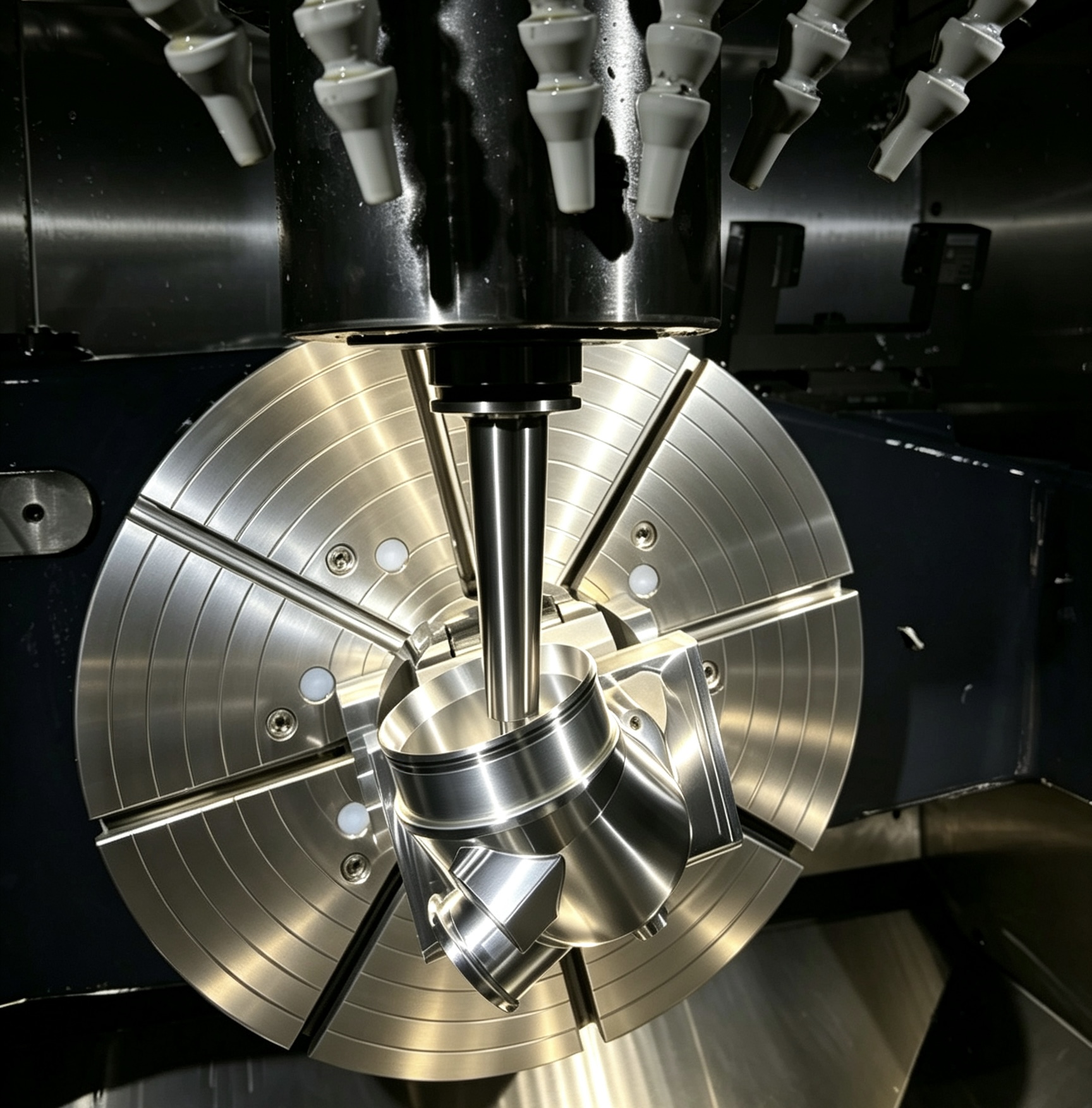
CNC machining is widely used for robot components because it is suitable for prototypes, low-volume production, precision interfaces, structural components, and complex metal parts.
Key advantages include:
- High dimensional accuracy
- Excellent repeatability
- Wide material selection
- Good mechanical properties
- Flexible design changes
- No dedicated production tooling for each design
- Suitable for prototypes and small batches
3D Printing
3D printing can be useful for early prototypes, concept verification, lightweight structures, and geometries that are difficult to manufacture using conventional methods.
However, when a robotic component requires high dimensional stability, precise interfaces, or production-grade mechanical properties, CNC machining may be a better option.
Sheet Metal Fabrication
Sheet metal fabrication is suitable for covers, guards, enclosures, brackets, and other relatively thin structures.
However, precision bearing seats, tight mounting interfaces, and complex 3D geometries are generally more suitable for CNC machining.
Die Casting and Injection Molding
For high-volume production, die casting or injection molding can provide lower unit costs after the design has been finalized.
However, these processes require dedicated tooling, which makes them less flexible during early-stage development or low-volume production.
For this reason, CNC machining is often a practical choice when robot manufacturers need custom parts, prototypes, and small-batch production.
3. Why CNC Machining Is Widely Used for Robot Parts
Robot components often need to combine several requirements:
Lightweight + Strong + Accurate + Repeatable + Complex
CNC machining provides a practical combination of these characteristics.
Unlike additive manufacturing, CNC machining removes material from a solid workpiece. This allows manufacturers to produce components from production-grade materials such as:
- Aluminum
- Stainless steel
- Titanium
- Alloy steel
- Engineering plastics
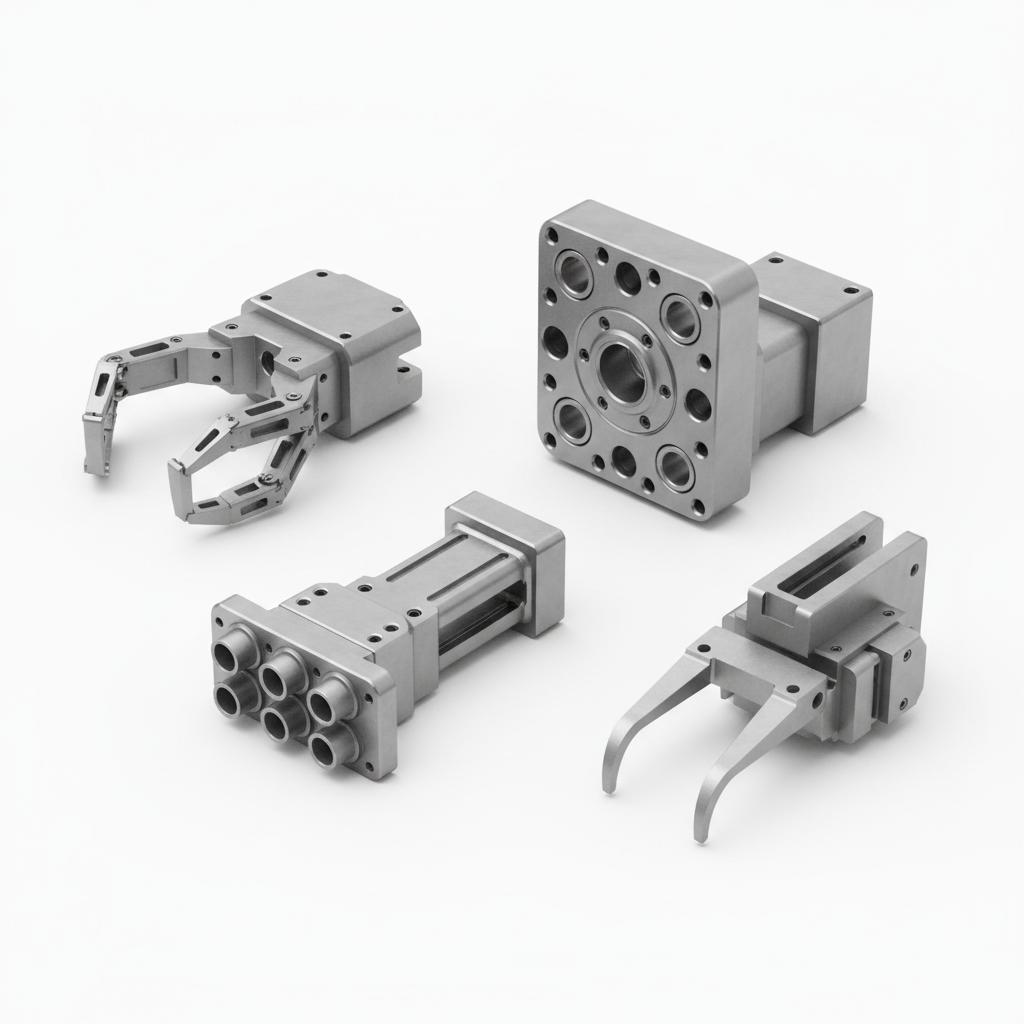
Common CNC-machined robot components include:
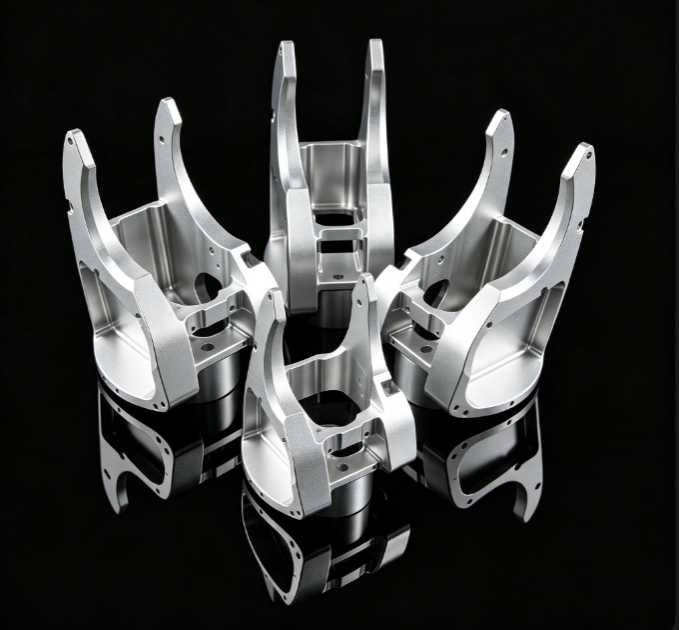
- Robotic joint housings
- Robotic arm links
- Motor housings
- Gear housings
- End-effectors
- Gripper components
- Sensor mounts
- Bearing housings
- Precision shafts
- Flanges
- Structural brackets
- Mounting plates
For many robotics applications, CNC machining provides a useful balance between precision, mechanical performance, design flexibility, and production efficiency.
4. When Is 5-Axis CNC Machining a Better Choice?
Some robot components have complex surfaces, angled holes, deep pockets, or multiple machining faces.
With conventional 3-axis machining, these features may require multiple setups.
Every additional setup can increase machining time and introduce potential alignment variation.
This is where 5-axis CNC machining can provide an important advantage.
A 5-axis CNC machine can access multiple surfaces of a component while reducing the number of setups required.
This can be particularly useful for:
- Robot joint housings
- Complex robotic arm components
- End-effectors
- Curved brackets
- Multi-face housings
- Components with angled holes
- Complex lightweight structures
A suitable 5-axis machining strategy can help improve access to complex features, simplify setups, and maintain positional consistency between different machined surfaces.
5. Production Volume Also Influences Process Selection
Production quantity is another important factor when choosing a manufacturing process.
Prototype Production
For early-stage robotics development, CNC machining can be a practical choice because the design may still change frequently.
Typical processes include:
- 3-axis CNC milling
- 5-axis CNC machining
- CNC turning
- Wire EDM
Small-Batch Production
Once the design becomes more stable, CNC machining can continue to provide repeatable production for small and medium quantities.
At this stage, manufacturers can optimize:
- Fixtures
- Cutting tools
- Machining strategies
- Inspection methods
- Production workflows
High-Volume Production
When production volume becomes very high and the design is stable, processes such as die casting, injection molding, MIM, or other forming technologies may become more economical.
However, CNC machining can still be used for critical finishing operations such as:
- Bearing seats
- Precision holes
- Threads
- Mounting surfaces
- Datum surfaces
In many cases, the most efficient manufacturing strategy combines several processes rather than relying on a single technology.
5. CNC Machining Supports Design Iteration
Robotics development is rarely a one-step process.
Engineers may need to modify:
- Hole locations
- Wall thickness
- Mounting interfaces
- Weight-reduction pockets
- Bearing seats
- Cable routing
- Motor mounting structures
- Assembly interfaces
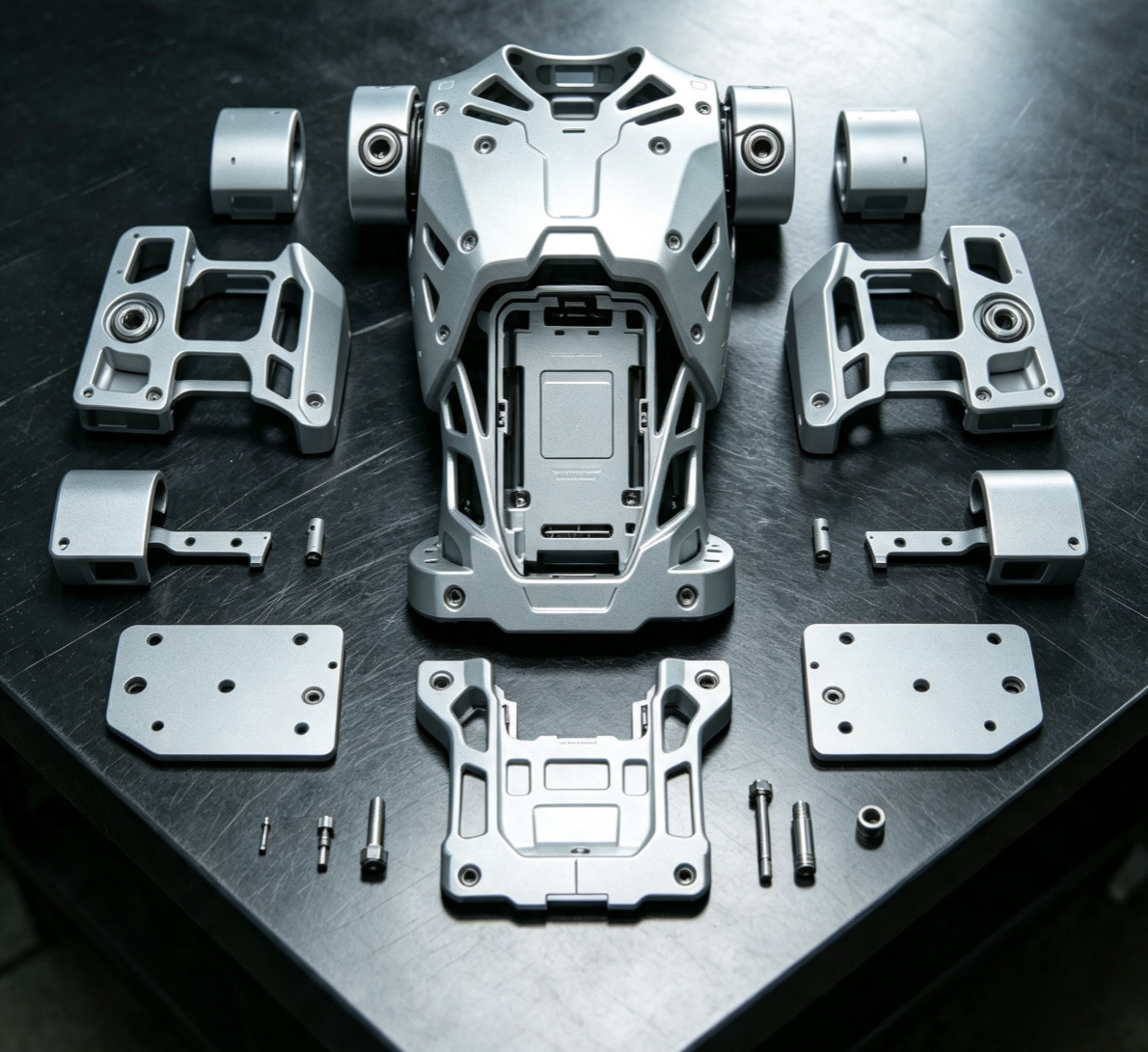
CNC machining allows many of these changes to be implemented without creating dedicated molds or dies.
This flexibility is particularly useful during prototype development and small-batch production.
A typical development cycle may look like:
CAD Design → CNC Prototype → Assembly → Testing → Design Revision → New Prototype
This makes CNC machining a useful manufacturing method for robotics companies developing new products and mechanical systems.
Custom CNC Machining for Robotics
At Pincheng Model, we provide custom CNC machining services for robotics and automation components.
Our machining capabilities cover components made from materials such as:
- Aluminum
- Stainless steel
- Titanium
- Alloy steel
- Engineering plastics
We support prototype development, custom parts, and small-batch production, with CNC milling, 5-axis machining, CNC turning, and additional manufacturing processes available according to project requirements.
If you are developing a robotic arm, gripper, actuator, joint, end-effector, sensor mount, or other custom mechanical component, you can send us your 2D drawing or 3D CAD file.
Our engineering team can review the design, evaluate manufacturability, provide DFM feedback, and prepare a quotation based on your project requirements.
CTA
Have a Robot Component to Machine?
Send us your 2D drawing or 3D CAD file for a quick review.
Related Posts
What Factors Impact Machining Tolerances?
October 20, 2024